Indoor Cat Enrichment: DIY Toys, Routines & Home Tweaks
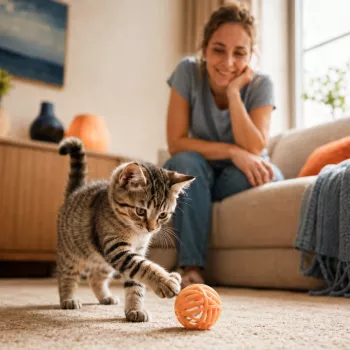
Indoor Cat Enrichment That Fits Real Life: DIY Toys, Play Routines, and Home Tweaks
Indoor cats thrive when their day includes hunting-like play, brain work, climbing, scratching, and cozy recovery time. A few small changes—rotating toys, adding vertical space, building simple DIY puzzles, and keeping a predictable play routine—can reduce boredom, nighttime zoomies, and stress behaviors while supporting healthy weight and confidence.
What “enrichment” means for an indoor cat
Enrichment isn’t about constant activity—it’s about giving your cat a day that feels complete. A balanced routine includes movement (stalk-chase-pounce), mental challenge (problem-solving), sensory variety (new textures and safe scents), and choice (places to retreat, hide, or perch).
Many common indoor issues improve when a cat can finish the full “hunt cycle”: watch → stalk → chase → capture → eat → groom → sleep. That pattern is a big reason short, focused play sessions often work better than leaving toys scattered around 24/7.
To keep it realistic, start small: add one new enrichment item or routine each week. Small wins compound—and they’re easier to maintain when life gets busy. For behavior best practices and environmental needs, see the American Association of Feline Practitioners (AAFP) Feline Behavior Guidelines and International Cat Care.
Quick DIY enrichment ideas using what’s already at home
DIY enrichment works best when it’s fast to set up and easy to clean up. These options use common household items and can be rotated to keep interest high.
- Paper-bag “ambush tunnel”: Cut a few peek holes, drop in a crinkle ball, and let your cat investigate. Supervise, and remove any handles or strings.
- Cardboard-box “window maze”: Connect two boxes with a cutout “door,” add packing paper for rustling, and swap the layout weekly.
- Toilet-paper-roll treat puzzle: Fold one end, add a few kibbles, fold the other end. Tighten the folds to raise the difficulty.
- Sock kicker toy: Fill a clean sock with fabric scraps, tie a knot, and add a pinch of catnip for adult cats that respond to it.
- Ice-cube “lick reward” (hot days): Freeze a teaspoon of tuna water or low-sodium broth; offer it in a bowl so it doesn’t slide across the floor.
- Scent enrichment: Rub a tiny amount of dried catnip or silver vine (if tolerated) on a toy, then rotate it away after 24–48 hours.
Toy rotation that keeps novelty high without buying more
Novelty is powerful—especially for indoor cats who see the same rooms every day. Rotation gives “new toy energy” without constantly adding clutter.
- Keep only 5–7 toys out at a time. Store the rest in a sealed bin so older toys feel new again.
- Rotate by play style: one wand toy, one kicker, one small chase toy, one crinkle/texture item, and one puzzle/foraging option.
- Refresh toys by changing the environment—place a toy on a different rug, inside a box, or near a new perch.
- Retire damaged toys immediately. Loose strings, exposed stuffing, and cracked plastics can be swallowed.
Simple play routines that match a cat’s natural rhythm
Most cats do better with frequent, short sessions than a single long workout. Aim for 2–3 play sessions per day (about 5–10 minutes each) and stop while your cat still wants more.
- Use the hunt sequence: slow wand movements → quick dart → hide behind furniture → final capture. Follow with a small meal or a few treats to complete the cycle.
- For high-energy cats: add a brief “stair sprint” or hallway chase by dragging a toy along the floor. Avoid laser-only sessions.
- For shy or senior cats: focus on slower ground play, gentle feather drags, and puzzle feeders to reduce impact on joints.
- If using a laser pointer: always end with a tangible toy capture and a snack so it doesn’t feel like an “unwinnable hunt.”
Example 7-Day Indoor Cat Enrichment Routine (Mix-and-Match)
| Day | Movement Play (5–10 min) | Brain Work (2–10 min) | Calm/Comfort |
|---|---|---|---|
| Mon | Wand toy with “hide and pounce” | TP-roll treat puzzle | Brush session + quiet perch time |
| Tue | Chase toy down hallway | Scatter-feed in a snuffle mat or towel folds | Window watching with a soft bed |
| Wed | Kicker toy wrestling | Box maze exploration | Cat-safe music/white noise during rest |
| Thu | Stair/vertical play (gentle jumps) | Food puzzle bowl | Warm spot nap (sun patch or heated pad on low) |
| Fri | Wand “bird” flight pattern | Scent swap (catnip toy rotation) | Grooming + nail check |
| Sat | Crinkle-ball chase | Clicker basics (touch/target) if desired | New blanket or texture to knead |
| Sun | Low-stress “slow hunt” for seniors | Hidden treats in paper cups | Long cuddle/solo hideaway choice |
Food-based enrichment: foraging without overfeeding
A cat-friendly home setup: vertical space, scratching, and safe hiding
Safety checks that keep enrichment stress-free
- Avoid ribbons, yarn, hair ties, and long strings for unsupervised play; these are common ingestion hazards.
- Check plants before bringing them home. Many houseplants are toxic to cats—confirm safety using the ASPCA toxic and non-toxic plants list.
- Skip essential oil diffusers around cats; some oils can be irritating or toxic and may trigger respiratory issues.
- If your cat suddenly stops playing, jumps less, or hides more, rule out pain or illness with a veterinarian before changing routines.
Printable support for consistency and variety
- Enrichment Ideas for Indoor Cats | Printable Cat Enrichment Guide | DIY Toys, Play Routines, and Cat-Friendly Home Tips
- Goal-Setting Guide for Real Results – Printable Goal Planner, SMART Goals Workbook & Productivity Template for Achievable Success (use it to keep a consistent play schedule and rotation plan)
FAQ
What are some easy DIY ideas for cat enrichment?
Try a cardboard box maze, a paper-bag ambush tunnel (handles removed), a toilet-paper-roll treat puzzle, or a sock kicker toy. Keep DIY toys simple, skip strings or ribbons, and supervise any new item until you’re confident it’s safe.







Leave a comment